How Roof Insurance Deductibles Work in Tennessee

Your homeowners' insurance deductible is the amount you pay before your insurance coverage kicks in for a covered peril. When you file a roof claim after damage from hailstorms or fallen trees, your insurance provider assesses the damage and approves a claim amount, leaving you responsible for paying the deductible while your home insurance company covers the remaining approved costs for repairs or full replacement.
Flat Dollar Amount Deductibles
Flat deductibles set a fixed dollar amount you pay regardless of your home's value or the total claim amount, with common amounts in Tennessee ranging from $500 to $2,500. Most homeowners find flat deductibles to be manageable compared to percentage-based alternatives, as you know exactly what you'll pay out of pocket when filing a claim.
Example calculation: You have a $1,500 flat deductible, and your insurance adjuster approves a $15,000 roof replacement claim.
- You pay: $1,500
- Insurance company pays: $14,500
Percentage-Based Deductibles
Percentage deductibles calculate your out-of-pocket cost as a percentage of your home's insured value, typically ranging from 1% to 5%. Insurance providers commonly apply these to wind and hail damage in the Nashville area and other parts of Middle Tennessee. This results in substantial financial burdens; a 2% deductible might seem small, but you may be surprised when you calculate the actual dollar amount for your home's value.
Example calculation: Your home is insured for $300,000 with a 2% deductible.
- Your deductible amount: $6,000 (2% of $300,000)
- For a $400,000 home: $8,000 deductible
Special Storm Deductibles
Some homeowners' insurance policies include separate deductibles specifically for wind, hail, or hurricane damage that often appear as higher percentage deductibles that only apply when specific weather events cause roof damage. Storm deductibles might be 2-5% of your home's insured value, a value that’s substantially higher than your standard deductible for other covered perils like fire or theft. Your policy documents should clearly state when these special deductibles apply.
What Influences Your Roof Replacement Deductible Amount?
Multiple factors determine the deductible you'll pay when filing a roof insurance claim, and recognizing these elements helps you make informed decisions when choosing coverage or evaluating your existing policy.
Your Chosen Deductible Level
You select your deductible amount when purchasing homeowners insurance or during policy renewal, with higher deductibles reducing your monthly insurance costs while lower deductibles increase them. For example, choosing a $2,500 deductible instead of $1,000 might save you $200-400 annually in premiums, but it means paying more out of pocket if you need to file a claim for storm damage.
Location and Weather Risk
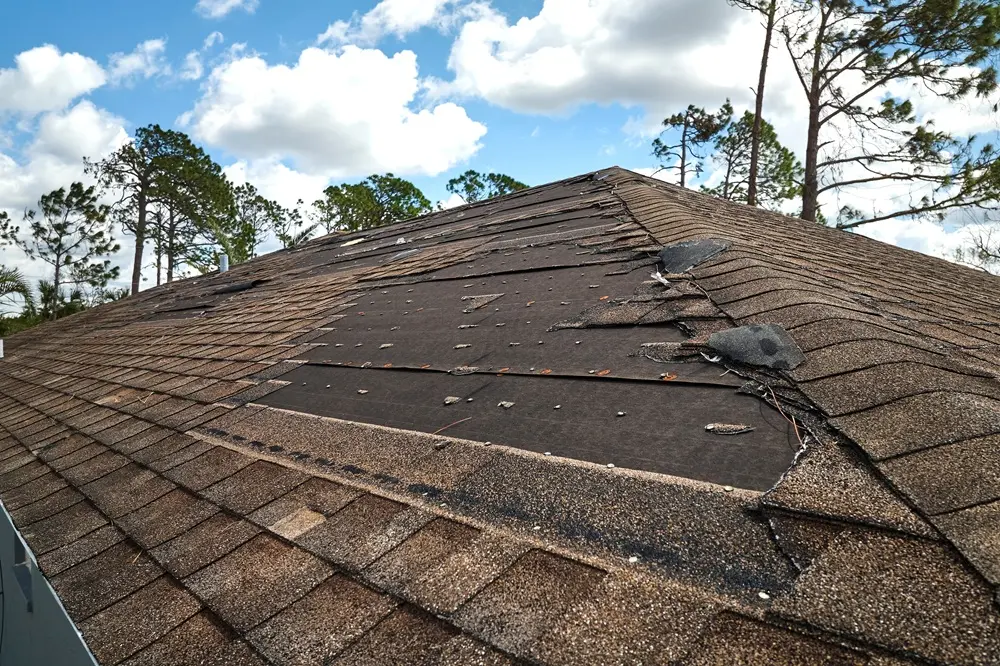
Tennessee's geographic diversity creates varying insurance risk profiles, with homes in areas prone to tornado activity, frequent hailstorms, or high winds facing higher risk assessments from insurance companies. If your neighborhood has experienced multiple roof claims from recent major storms, insurance providers may implement percentage-based deductibles for wind and hail damage, increase flat deductibles at policy renewal, or adjust premiums to reflect increased risk.
Age and Condition of Your Existing Roof
Your current roof's age influences both your insurance coverage and potential claim outcomes; insurance companies view older roofs as higher risk due to normal wear and accumulated damage over time.
- Roofs under 10 years old: Full replacement cost coverage with standard deductibles applies, and claims for storm damage typically receive approval without complications.
- Roofs 10-20 years old: Some insurers start applying actual cash value calculations or require higher deductibles, with your policy potentially covering roof repairs rather than full replacement for certain types of damage.
- Roofs over 20 years old: Insurance companies may reduce coverage, require roof inspections before renewing policies, or make roof replacement a condition for continuing coverage.
A well-maintained roof receives better treatment than a neglected one, since proper care through regular inspections and addressing missing shingles shows your insurance provider that you’re a responsible homeowner.
#cta_here
Actual Cash Value vs. Replacement Cost Coverage
The distinction between actual cash value and replacement cost coverage significantly impacts what you'll pay beyond your deductible when replacing your roof. These policy types handle depreciation differently to create substantial cost differences for Tennessee homeowners.
Replacement Cost Policies
Replacement cost coverage pays for a new roof using current materials and labor costs without factoring in depreciation, so after you pay your roof deductible, your insurance company covers the full cost to restore your roof to its pre-damage condition using comparable materials. For example, if hail damage destroys your 12-year-old roof, a replacement cost policy funds a complete new roof installation at today's prices without penalizing you for your roof's age when calculating the claim payout.
Actual Cash Value Policies
Actual cash value policies calculate payouts by subtracting depreciation from your roof's replacement cost. Your insurance company will determine your roof's current value based on age, condition, and expected lifespan before paying that depreciated amount minus your deductible.
Example calculation: Your 15-year-old roof needs replacement.
- Today's replacement cost: $15,000
- Estimated roof lifespan: 25 years
- Depreciation: 60% (15 years ÷ 25 years)
- Remaining value: 40% × $15,000 = $6,000
- Your deductible: $1,500
- Insurance company pays: $4,500
- You pay: $10,500 ($1,500 deductible + $9,000 gap)
These policies create significant out-of-pocket expenses when replacing damaged roofs, and many Tennessee homeowners discover too late that their actual cash policy leaves them thousands of dollars short of covering roof replacement.
The Claims Process and Your Deductible
The timeline and payment structure for roof deductibles follow specific patterns that Tennessee homeowners should know before filing a claim, since you pay your deductible to your chosen roofing contractor rather than directly to your insurance company.
When You Pay Your Deductible
Most reputable roofing companies require a deductible payment when work begins or upon project completion. Some contractors may request payment upfront before ordering materials, while others invoice you after finishing the installation. Tennessee law strictly prohibits contractors from paying or waiving your deductible under Tennessee Code Annotated § 62-6-103, which makes it illegal for contractors to offer rebates, allowances, or other inducements that effectively waive the deductible amount.
How Insurance Checks Are Issued
After your insurance adjuster approves your roof claim, the insurance company issues payment based on your policy type and the claim specifics. Replacement cost policies typically provide two payments: an initial check for the actual cash value (roof value minus depreciation and deductible), then a second payment for the recoverable depreciation after the work is complete. Some insurance companies issue checks jointly to you and your mortgage lender if you carry a home loan, since your lender must endorse these checks to protect their financial interest in maintaining your home's value.

Tax Implications: Is Roof Replacement Tax Deductible in Tennessee?
For your primary home, roof replacement usually isn’t tax-deductible because the IRS treats it as a capital improvement that increases property value. However, these costs raise your home’s cost basis, which can affect capital gains when you eventually sell. Roof replacement costs for rental properties or business-use portions of your home may qualify as deductible expenses, with landlords able to depreciate new roof costs over 27.5 years for residential rental properties under IRS Publication 527.
Installing energy-efficient roofing materials might qualify for federal tax credits under the Energy-Efficient Home Improvement Credit that IRS Form 5695 outlines, with metal roofs featuring specialized reflective coatings or certain materials meeting ENERGY STAR requirements potentially qualifying for credits.
How to Lower Your Out-of-Pocket Roof Replacement Costs
Thankfully, strategic planning and informed decisions can reduce the money you'll pay when your roof needs replacement. Tennessee homeowners have several options for managing both insurance deductibles and total project costs.
- Maintain your roof properly: Schedule annual professional inspections to catch problems early, clean gutters twice yearly to prevent water damage, and replace damaged shingles promptly since your insurance company reviews maintenance history when evaluating claims.
- Shop for better insurance rates: Review your homeowners policy yearly and get quotes from multiple insurers. Compare coverage, deductibles, premiums, and whether your policy pays actual cash value or replacement cost.
- Build an emergency fund: Set aside money specifically for your roof deductible and any coverage gaps. Calculate your maximum out-of-pocket costs based on your policy’s highest deductible.
- Work with a reputable roofing company: Hire contractors experienced with insurance claims. A knowledgeable roofer documents damage clearly, communicates with adjusters, and ensures estimates reflect all necessary work.
Quality Exteriors provides comprehensive insurance claims support, meeting with adjusters on-site and helping Tennessee homeowners through every step of the claims process to ensure fair claim approval throughout the Nashville area and Middle Tennessee.