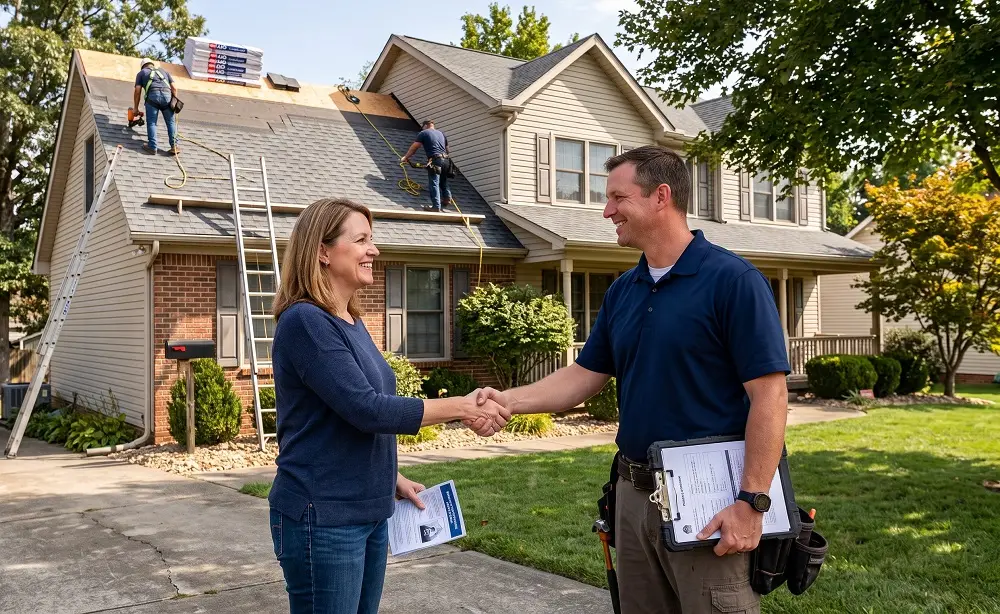
The Three Separate Promises Behind the Phrase "Roof Warranty"
One word covers three instruments with three different warrantors. The manufacturer covers defects in the product. The installer covers errors made during installation. Homeowners insurance isn’t a warranty, and responds to sudden accidental loss such as hail bruising or wind uplift.
Most Tennessee roofs carry the first two simultaneously. A manufacturer’s warranty may cover the full material value for roughly the first 10 years before coverage begins to prorate, while the installer’s workmanship warranty typically lasts 5 to 10 years. Those two differ in every respect that matters.
That sorts real problems fast. Cracking or heavy granule loss in year six is a manufacturer question. A leak in the chimney flashing in year two is the installer's. Shingles that disappear after a wind event are your carrier's, and attic moisture usually comes down to workmanship.
What a Manufacturer's Material Warranty Covers
A denial nearly always turns on one question: was the product faulty when it left the plant, or did something else fail? The patterns manufacturers accept are cracking, blistering, curling, delamination, abnormal granule loss, and, on metal roofs, coating failure beyond the stated chalk and fade limits.
What separates a defect from ordinary aging is the pattern itself. A bad batch fails the same way on every roof it went to, while age fails unevenly, worst on the slopes taking the most sun and weather.
Every asphalt shingle carries a code on its back face that identifies the manufacturer, product line, and batch. Photographing that code can provide valuable documentation if a warranty claim arises. Ask your installer to shoot it before the bundles go up.
Is a Lifetime Shingle Warranty Really Lifetime?
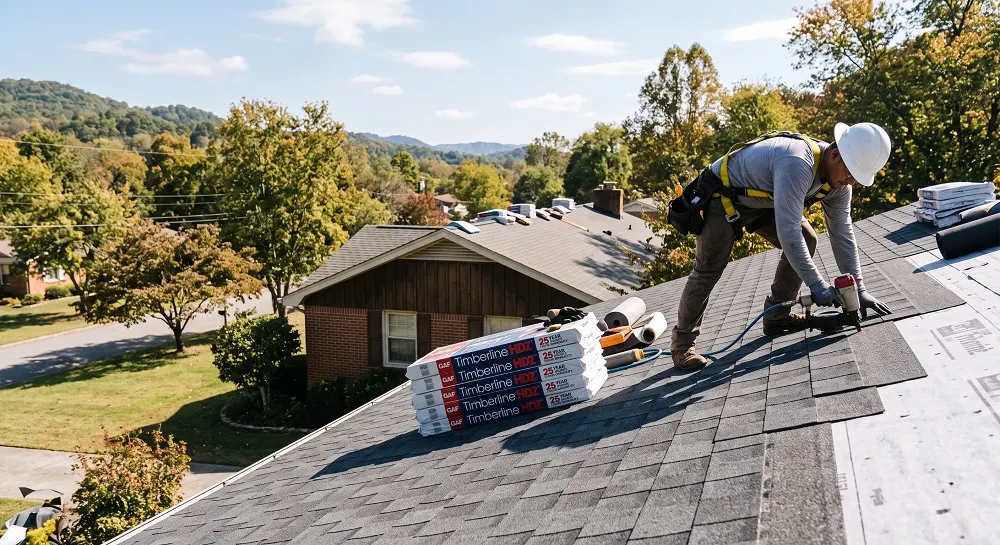
Not in the way it sounds. In most documents, "lifetime" means as long as you own the home and the original shingles stay on the original roof. It also means a single-family house you live in, not a rental, duplex, or commercial building.
Lifetime describes how long you own the house, not how long the roof lasts. Labor is never included at any point.
Nor does the word describe a payout. A proration schedule does that: full material value for about 10 years, then a shrinking obligation every year afterward, with labor never included. Your schedule sits in the warranty document itself, worth reading before you sign rather than after a leak.
An approved claim also produces a credit toward replacement material rather than a check, so you still pay someone to tear off the old roof and install the new one. Our breakdown of roof replacement costs shows what that labor share looks like here.
What a Contractor Workmanship Warranty Covers
A workmanship warranty comes from the roofing company that installed your roof. It covers problems related to the installation itself, not defects in the roofing materials. Flashing details, fastener placement, underlayment laps, valley treatment, and ventilation all sit here. For the first decade of a roof's life, this is usually the promise that matters more.
Terms across Middle Tennessee run in a wide band. Five years is common, while 10 years is more typical of established local companies. A 25-year workmanship warranty is generally available only when the installation is registered with the manufacturer.
Read the term as a signal of what a company expects of its own crews. A very long one raises a different question: who will still be there to honor it?
What Happens If the Company that Installed Your Roof Closes?
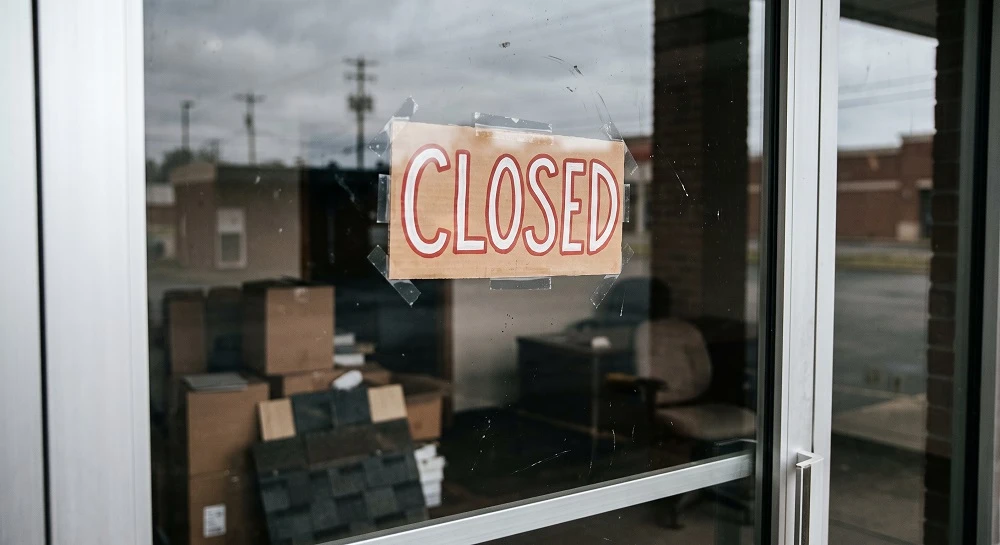
Your manufacturer material coverage continues, because it belongs to the product rather than the installer. Your workmanship coverage may not, and which way it goes was decided when you signed.
Manufacturer coverage survives the installer. Workmanship coverage survives only if it was registered with the manufacturer while the company still existed.
A contractor-backed workmanship warranty is ultimately a promise from the installing company, so its long-term value depends on that business remaining in operation and able to honor the coverage. No fund sits behind it, and nobody else is obligated to step in.
A manufacturer-backed warranty works differently. Inside an enhanced program, the installer registers your roof with the manufacturer. If that installer is gone when a problem appears, the manufacturer can send another certified contractor to service the claim. That registration is why the confirmation belongs in your file.
How Tennessee Law Limits Any Workmanship Promise
A workmanship warranty is a contract, and Tennessee caps how long you can enforce one. Under Tennessee Code Annotated section 28-3-202, a construction defect claim must be brought within four years of substantial completion. One more year is added where the injury appears in that fourth year.
So the practical outer limit is about five years, and fraud or deliberate concealment is the narrow exception.
In plain terms: four years from completion, five if the damage surfaces in year four. After that, a warranty is worth whatever the company honoring it is worth.
Set that against a 25-year or lifetime workmanship promise. Once the statutory window has passed, a warranty is only as useful as the company and manufacturer standing behind it. That’s why it’s worth looking at accountability, not just the number of years promised.
One procedural point is worth knowing. Under section 66-36-103, you must give the contractor written notice before filing anything. Doing so pauses the limitations clock while the contractor inspects and responds.
Every summary of Tennessee law in this article, here and below, is general information rather than legal advice. Statutes are amended and applied case by case, and we encourage you to speak with a Tennessee attorney about your own situation.
Storm Damage Is an Insurance Claim, Not a Warranty Claim
Homeowners insurance covers sudden accidental loss, warranties cover defects and installation errors, and hail, straight-line wind, tornado debris, and falling limbs all sit on the insurance side.
Middle Tennessee makes that boundary matter. Spring and early summer bring the hail and wind behind most roof claims here, and three weeks spent chasing the wrong one is time your carrier's reporting window cares about.
The cause of the damage determines which coverage applies, so start by getting a written inspection report that identifies the damage and its likely cause. That report can help point the claim to the right party. If possible, wait to authorize permanent repairs until after the inspection, since changing the damaged area can make it harder to document the original problem and support your claim.
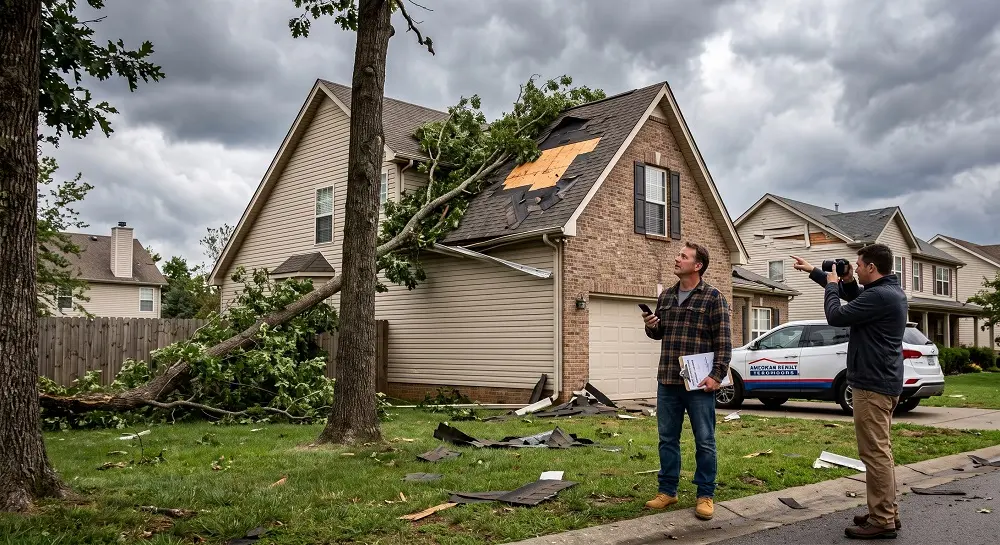
What a Tennessee Roofer May and May Not Do Inside Your Insurance Claim
Tennessee regulates roofing work paid from insurance proceeds specifically, at Tennessee Code Annotated section 62-6-601. Three provisions matter before you sign in your driveway.
- Written disclosure before contract, covering the license numbers the company holds and a detailed description of the damage and repairs it intends to claim, with a detachable cancellation notice.
- Three business days to cancel, counted from the day your insurer tells you in writing that the claim isn’t covered, with no payment required before then.
- No negotiating your claim with your carrier, and no advertising that the company will, without a Tennessee public adjuster license.
Your deductible is still your responsibility, even when a contractor offers to cover it. If a contractor suggests billing the insurance company in a way that makes the deductible disappear, it can create problems for both of you.
What Voids a Roof Warranty
Four of the 12 causes below are within a homeowner's control. The rest were set at installation, or by later work performed by somebody else:
- Unbalanced or inadequate attic ventilation, at installation;
- Mixing system components from different brands, at installation;
- Warranty registration missed or filed late by the contractor;
- Third-party penetrations from satellite, solar, HVAC or antenna work;
- Homeowner or handyman patching;
- Pressure washing the shingles, which voids coverage on the area washed;
- Fasteners driven wrong or placed wrong, which voids the separate wind term even where the shingles are sound;
- A roof slope below the product minimum at installation;
- Installing over existing layers or unsound decking, which Tennessee's adopted building code also prohibits;
- A permit never closed, or a final inspection never passed;
- Deferred maintenance and ignored leaks;
- Installation by an unlicensed contractor, which leaves you no enforceable workmanship warranty.
Attic ventilation is worth singling out. It’s a code requirement, a manufacturer requirement, and invisible from the ground, which makes it easy to shortchange and blame later. Get the intake and exhaust calculation written into your scope of work, because that’s the only version of it you can produce at claim time.
Which Parts of a Roof the Shingle Warranty Covers
A shingle warranty typically covers the shingles and certain named accessories, but other roofing components that can contribute to leaks may fall outside the base coverage.
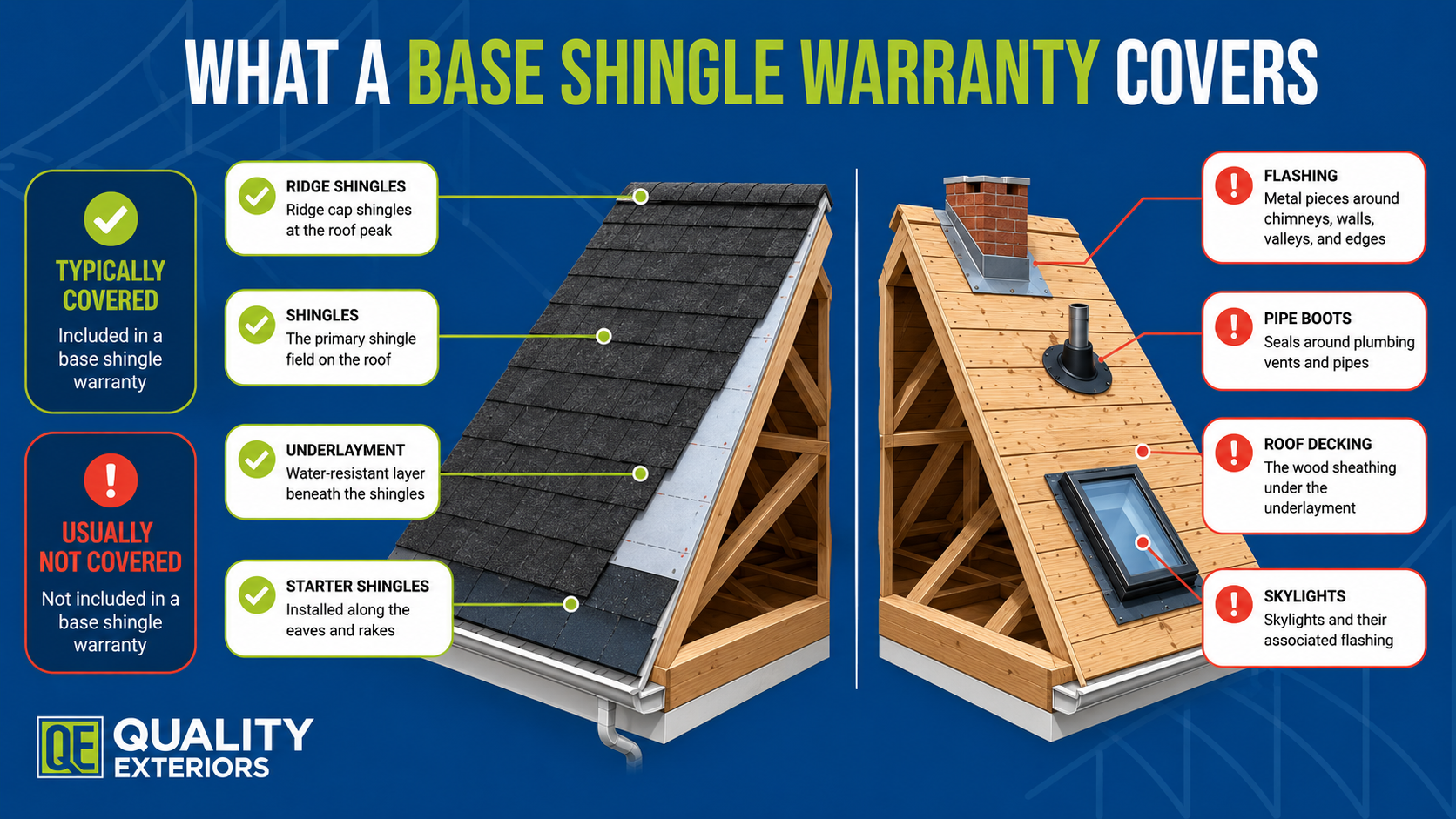
Inside the base warranty:
- Shingles
- Matching ridge cap and starter strip
- Brand underlayment and leak barrier, on system tiers only
- Brand ventilation products, on system tiers only
Outside of the warranty:
- Step and counterflashing at chimneys, unless the top tier names the location
- Pipe boots and vent flashing, unless the top tier names the location
- Fasteners
- Roof decking and framing
- Skylights and their curbs
- Gutters and downspouts
That second list is what a system warranty exists to shorten, and the two "unless" entries are where the money sits. If a contractor says flashings are covered, ask which document says so and which locations it names, because the top programs cover named locations rather than flashings in general.
Enhanced System Warranties and the Certification Level That Gates Them
An enhanced system warranty isn’t a separate product but an upgrade stacked on the two above. It extends the material coverage and, on the upper tiers, absorbs the workmanship promise into an instrument the manufacturer administers rather than the contractor.
Manufacturers reserve these for contractors they certify and monitor, so your installer sets the ceiling on the coverage you can buy.
On the GAF ladder, the top tier is the Golden Pledge Limited Warranty. It holds the non-prorated period open far longer than the base warranty does, and it adds workmanship coverage.
GAF states on its own warranty resource page that this workmanship coverage is available only through Master Elite contractors. That is a manufacturer rule rather than a sales position, and it is why a company without that certification cannot offer it at any price.
The contractor you hire sets the ceiling on the coverage you are permitted to buy. No budget raises it.
A certification badge by itself doesn’t tell you much beyond a company’s relationship with a particular brand. What makes the designation more meaningful are the requirements a contractor must meet to enter that tier.
On the Golden Pledge, the finished roof is inspected by a manufacturer-certified inspector rather than by the contractor who built it. That is the one requirement nobody can buy. Certification tiers are searchable on GAF's own contractor directory, so any claim can be checked quickly.
The manufacturer's document defines coverage, eligibility, exclusions, and transfer rules. The table is a summary for comparing quotes and does not modify coverage.
Register It, Keep the File, and Transfer It When You Sell
Whether your best coverage exists at all can turn on a form filed after the crew leaves. Base shingle and system warranties require no registration: coverage attaches at purchase, so keeping the contract or invoice as proof is enough.
Enhanced warranties must be registered, and only the certified contractor can do it, so the step that decides whether your best coverage exists is performed by someone else. GAF gives the contractor 45 days from installation and tells homeowners to call GAF directly if the warranty has not arrived within 60 days.
So put a reminder sixty days out from your final invoice. If nothing carrying a warranty number has reached you, chase the contractor once and the manufacturer straight after.
Three documents should reach you without you asking: the warranty itself before you sign, the registration confirmation after completion, and the installation record.
Keep six things in one folder:
- Signed contract and itemized invoice
- Manufacturer registration certificate
- Closed permit and final inspection record
- Installation photographs
- Dated maintenance and inspection records
- Transfer notice, once you sell
That folder is the difference between a warranty and a story about a warranty.

Transferring It When You Sell
Most manufacturer warranties allow one transfer. On a Golden Pledge, the new owner must notify GAF in writing within 60 days of the sale. Miss that window and the coverage can drop to a much shorter term, which cuts the roof’s worth to a buyer.
At listing time, the transfer rule matters less than the paperwork. A buyer's agent asks for the install date, the invoice, and the registration certificate, and without them a five-year-old roof reads as unverifiable.
Verify the Contractor Before the Warranty Ever Matters
Tennessee sets two license thresholds, and which one covers your job depends on both price and county. Work at or above $25,000 requires an active license from the Tennessee Board for Licensing Contractors. Since January 2014, that also covers roofing subcontractors whose own portion hits the same figure.
A separate Home Improvement license applies from $3,000 to just under $25,000, but only in the nine counties that adopted it: Bradley, Davidson, Hamilton, Haywood, Knox, Marion, Robertson, Rutherford and Shelby.
White House shows how fine that line gets. The city sits in both Robertson and Sumner counties, and the line runs through it along Highway 31W. Only Robertson adopted the law. Two houses on opposite sides of that road fall on opposite sides of the rule.
Three checks take five minutes. Look the license number up through the Board and confirm it is active. Note the monetary limit, because a contractor cannot legally bid above it. You should also check that the street address is real rather than a mailbox.
For the wider vetting checklist, our guide to choosing a roofing contractor goes past warranties into crews, insurance and storm-chaser signals.
#cta_here
Warranty Questions to Ask Before You Sign
Bring these to every estimate. A contractor confident in the work answers them without hesitation, and one who deflects has told you something useful.
On coverage:
- Which manufacturer warranty applies to the exact products in this quote?
- Is the material coverage prorated, and from which year?
- Are the flashings at chimneys, valleys, sidewalls, and plumbing vents covered, and by which document?
- What ventilation work is in the scope?
On funding:
- What is the workmanship term?
- Is it backed by the company alone or registered with the manufacturer?
- Are tear-off and disposal included?
- Will you send me the registration confirmation?
On paperwork and the company:
- Does the warranty transfer, and inside what window?
- What specifically voids it?
- What is your license number, monetary limit, and street address?
Get the answers in writing, because a warranty conversation you cannot produce later isn’t a warranty. We’ve put together a list of questions to ask a roofer that covers price, scheduling, and crew.