Why Roof Ventilation Matters for Your Home
Without proper roof vents, heat and moisture get trapped in the attic and damage the roof system. Summer heat pushes temperatures above 150°F and strains the AC, while winter humidity condenses on cold surfaces, causing mold and wood rot.
Having the right attic ventilation protects your investment in several critical ways:
- Extends roof lifespan: Excessive heat ages shingles prematurely, causing them to crack, curl, and lose granules years before their expected lifespan ends.
- Prevents moisture damage: A balanced ventilation system removes humid air before it condenses into water that rots roof decking and structural framing.
- Reduces energy costs: Cooler attics mean less heat transfer into living spaces, lowering the burden on your cooling system during Tennessee's hot summers.
- Stops ice dam formation: In winter, proper ventilation keeps the roof deck cold, preventing the freeze-thaw cycles that create damaging ice dams along eaves.
- Improves indoor air quality: Fresh air circulation prevents stagnant conditions that allow mold spores and other contaminants to accumulate in attic spaces.
For homeowners investing in metal roofing or other premium materials, proper ventilation protects that investment by preventing heat buildup that can void many manufacturer warranties.
How Roof Ventilation Works
A functional attic ventilation system operates on a simple principle: hot air rises and exits through exhaust vents near the top of your roof while cooler, fresh air enters through intake vents lower on the structure. This natural circulation, known as the stack effect, creates continuous airflow that regulates attic temperatures and prevents moisture buildup.
Both types of vents must work in tandem in the right proportions for ventilation to be balanced:
- Intake vents: Positioned along the roof's lower edges, typically in soffits or eaves, these draw fresh outdoor air into the attic to replace rising hot air.
- Exhaust vents: Located near the roof's peak or ridge, these release the hot, humid air that accumulates at the highest points of your attic.
- Proper ratio: Industry standards call for roughly equal amounts of intake and exhaust ventilation, with at least one square foot of net free vent area for every 300 square feet of attic floor space.
- Continuous airflow: The ventilation cycle repeats constantly, with natural convection and wind pressure driving air movement through intake and exhaust vents.
In Middle Tennessee's climate, where summer heat and humidity add more strain on roofing materials, proper ventilation helps prevent damage that shortens roof life and drives up cooling costs year-round.
Exhaust Vents: Letting Hot Air Escape
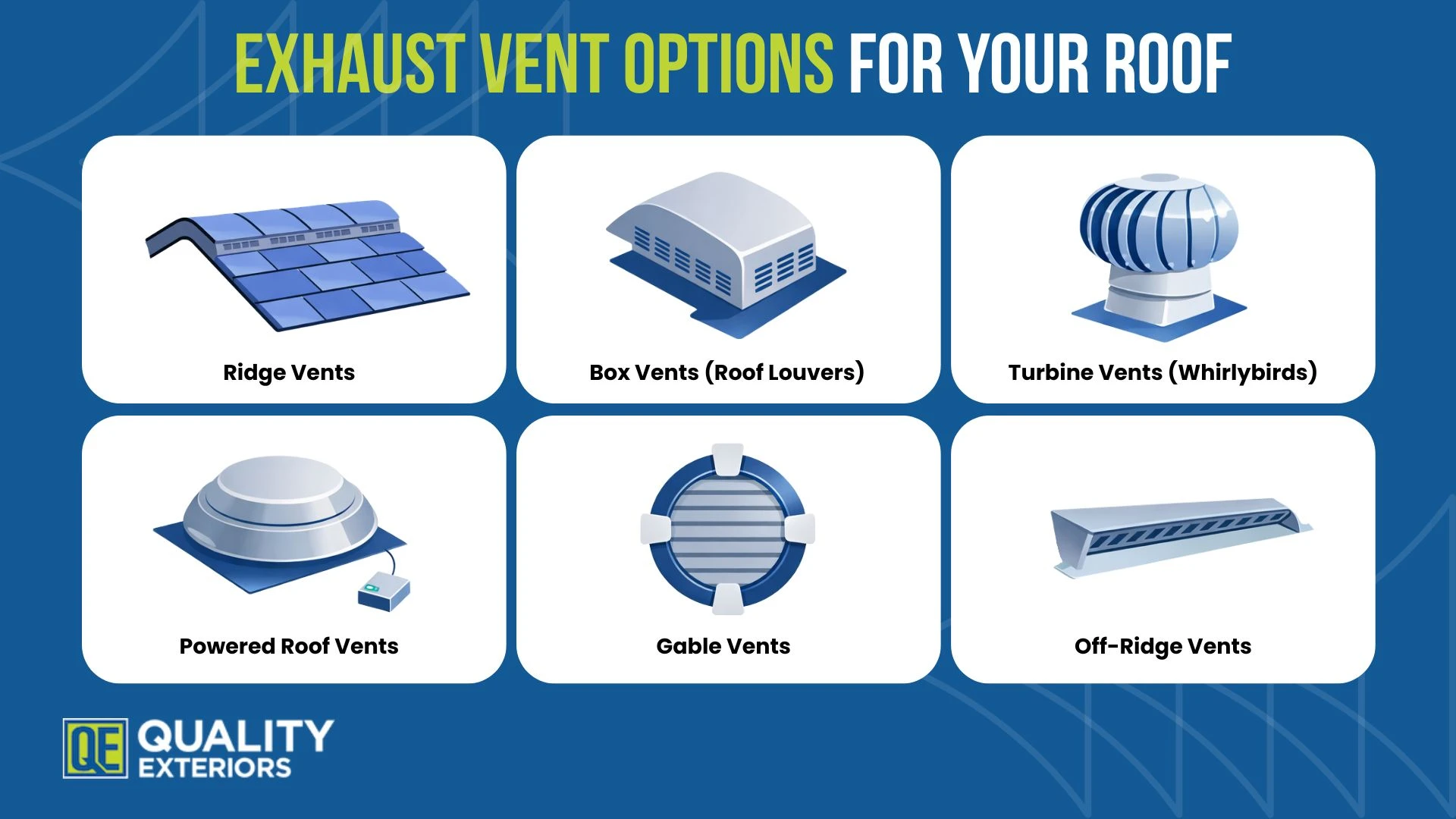
Exhaust vents sit near the top of your roof, where hot air naturally accumulates. These vents release the heated, moisture-laden air that rises to your attic's highest points, preventing heat buildup that can warp roof decking and accelerate shingle aging.
Ridge Vents
Ridge vents run continuously along the roof's peak, providing even exhaust ventilation across the roofline. Their low profile blends into the roof surface, so they’re nearly invisible from ground level while delivering superior performance. These vents work best when paired with adequate soffit vents to create balanced airflow, eliminating hot spots that form with scattered exhaust points.
Box Vents (Roof Louvers)
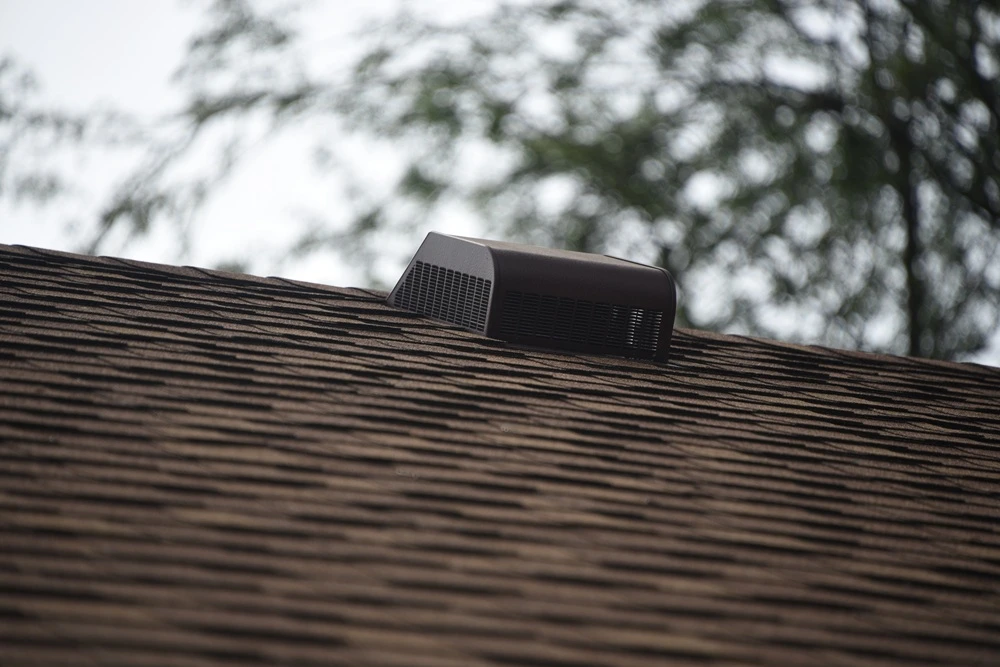
Box vents, also called roof louvers, are square or rectangular static vents installed near the ridge. Each unit creates an individual exhaust point for hot air to escape through natural convection without mechanical assistance. Multiple box vents spread across the roof deck offer sufficient ventilation for smaller homes or supplement other exhaust systems on complex roof shapes.
Turbine Vents (Whirlybirds)
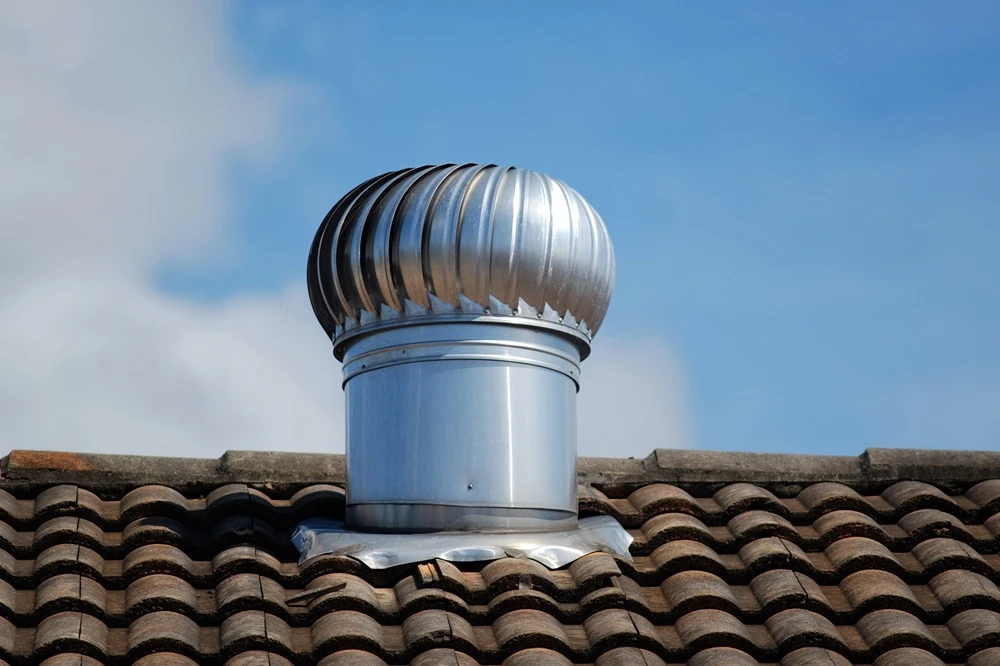
Turbine vents use wind power to spin their distinctive dome-shaped caps, creating a vacuum that actively pulls hot air from the attic. Even light breezes activate the spinning motion, so in many conditions, these are more efficient than static vents. The rotating mechanism generates steady suction that removes humid air faster than passive ventilation alone, though it isn’t as effective on calm days.
Powered Roof Vents
Powered vents use electric or solar-powered fans to actively exhaust large volumes of hot air regardless of wind conditions. Solar models eliminate electric costs while providing powered exhaust during peak sun hours when attics get hottest. However, these mechanical systems can create negative pressure that pulls conditioned air from living spaces if intake ventilation doesn't keep pace.
Gable Vents
Gable vents mount on the vertical wall at the end of an attic, usually in the triangular section below the roof peak. These allow cross-ventilation when the wind blows perpendicular to the gable ends, working as both intake and exhaust depending on wind direction. Hip roofs lack gable ends altogether, making these vents impossible to install on many roof types.
Off-Ridge Vents
Off-ridge vents sit slightly below the roof's peak, functioning similarly to box vents but designed for installations where true ridge vents aren't practical. Hip roofs and complex roof shapes often use off-ridge vents because continuous ridge vents can't follow hip seams effectively.
Intake Vents: Bringing Fresh Air In
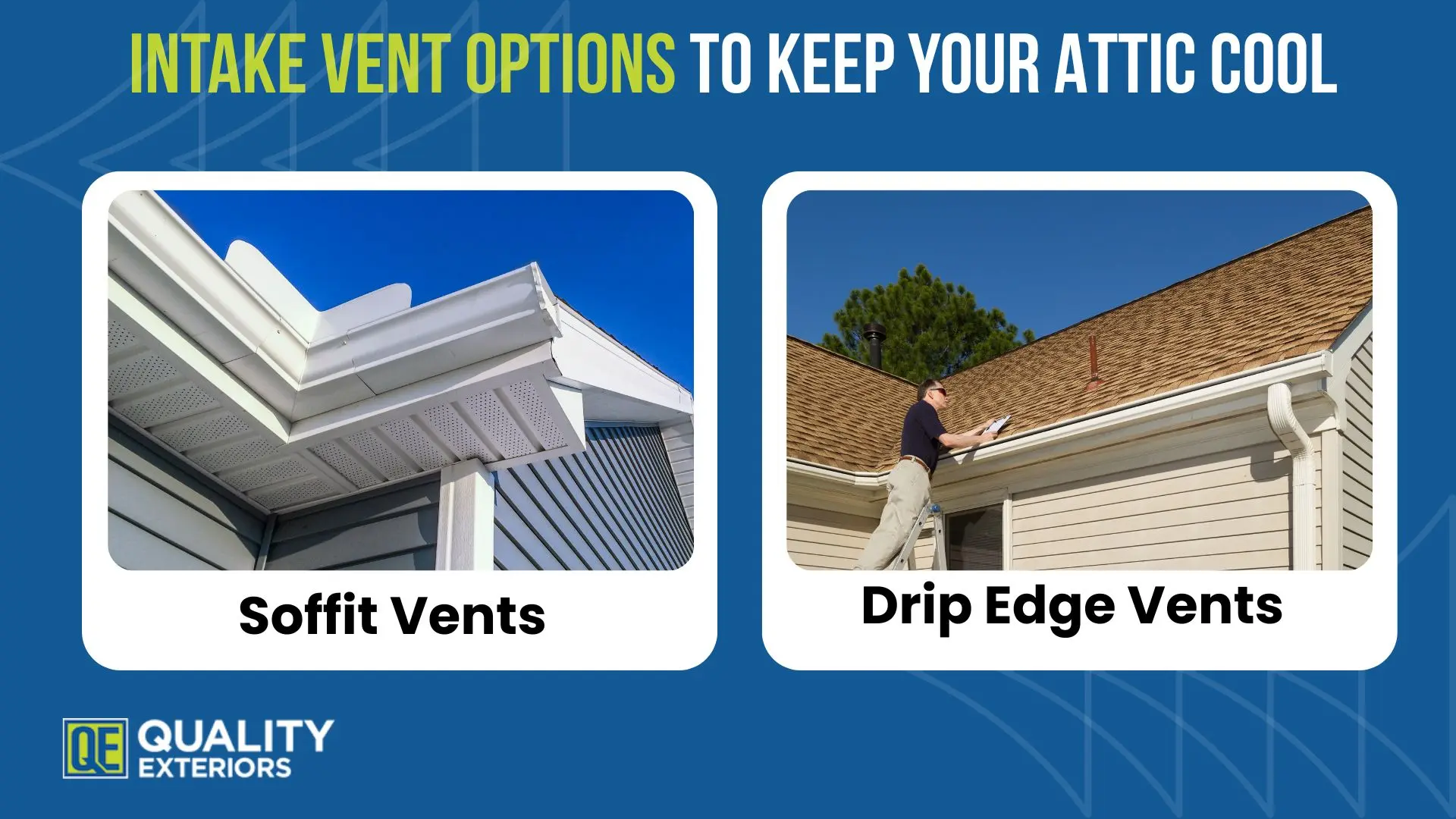
Intake vents are positioned along the lower portions of your roof to draw cool air into the attic. This incoming fresh air replaces the hot air exiting through exhaust vents, creating the circulation needed for effective roof ventilation. Without adequate intake, exhaust vents can't function properly because there's no air source to pull through the system.
Soffit Vents
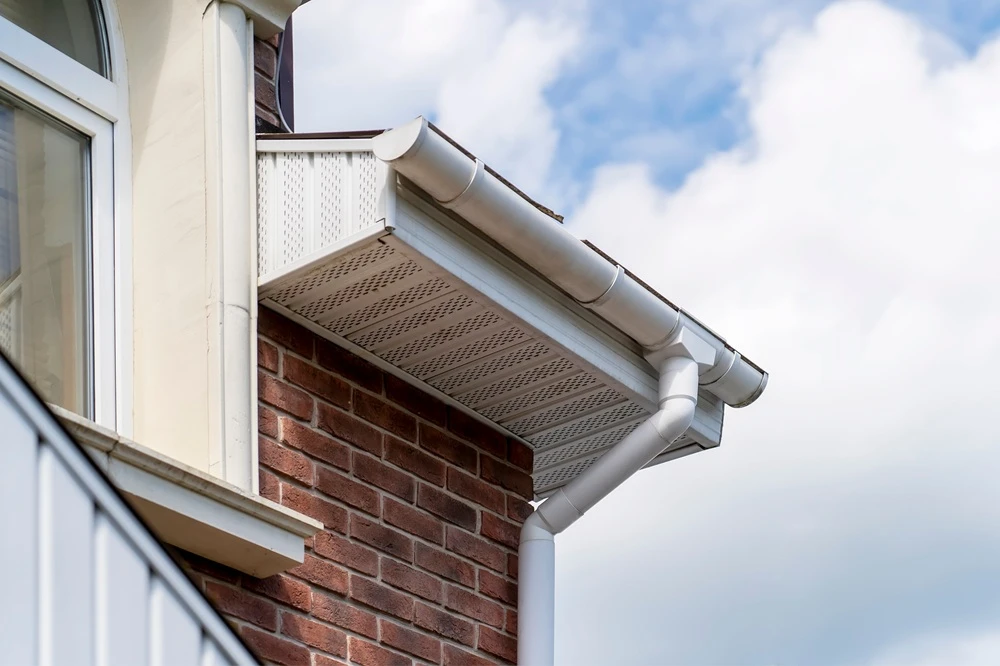
Soffit vents are installed in the underside of the roof eaves, perfectly positioned to bring cool air into the attic from the lowest point of the roof structure. These vents come in continuous strips or individual perforated panels that blend into the soffit material, making them the most effective intake option for residential roofs.
Drip Edge Vents
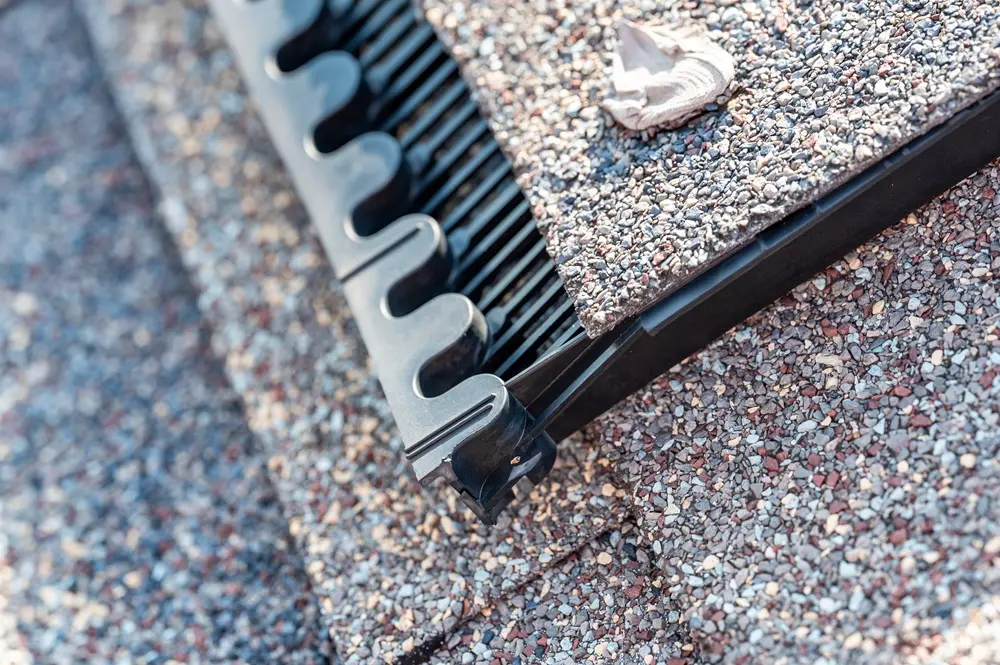
Drip edge vents integrate intake ventilation directly into the roof edge detail, solving ventilation challenges on homes without soffit overhangs. These specialized products combine the water-shedding function of standard drip edges with intake slots that draw air into the attic space. Installation requires removing the existing drip edge during roof repair or replacement work.
#cta_here
Natural vs. Mechanical Ventilation Systems
Roof ventilation systems fall into two categories based on how they move air through your attic. Natural ventilation relies on physics and passive airflow, while mechanical systems use fans or motors to force air movement.
Natural ventilation uses hot air's tendency to rise and the wind's ability to create pressure differences. Ridge vents, soffit vents, box vents, and turbine vents all work with these natural forces, delivering reliable ventilation for most Tennessee homes without noise or ongoing costs.
Mechanical ventilation uses powered exhaust vents with electric or solar-powered fans to actively pull air from the attic. These systems excel at removing large volumes of hot, humid air quickly, making them useful for homes with extreme heat buildup. However, if they overpower intake vents, they introduce complexity and can create problems.
Choosing the Right Roof Vent Types for Your Home
Your home’s ideal roof vents depend on your roof shape, existing ventilation, and specific performance needs. The goal is to create balanced airflow that keeps your attic temperature controlled and moisture-free year-round.
Consider these key factors when planning your roof ventilation system:
- Roof design compatibility: Gable roofs accommodate continuous ridge vents paired with soffit vents most effectively, while hip roofs often need off-ridge exhaust vents or multiple box vents distributed across the roof deck.
- Climate considerations: Tennessee's humid summers demand adequate air exchange to prevent both heat buildup and condensation, often benefiting from slightly more ventilation than minimum standards require.
- Balanced intake and exhaust: Calculate your attic floor space and provide at least one square foot of net free vent area per 300 square feet, split evenly between intake vents along eaves and exhaust vents near the peak.
- Integration with insulation: Proper vent baffles prevent blown-in insulation from blocking soffit vents, maintaining clear airflow channels from intake to exhaust points.
The most effective approach combines continuous soffit intake ventilation with continuous ridge exhaust ventilation, creating even airflow distribution across the entire attic and eliminating the hot spots that occur with scattered vent placement.
Common Ventilation Problems We See in Murfreesboro
Working throughout Rutherford County since 2006, we've noticed several ventilation issues that repeatedly show up in local homes. Tennessee's combination of hot, humid summers and occasional cold snaps creates specific challenges that generic ventilation advice doesn't always address.
Inadequate Exhaust Ventilation
Problem: Many older homes have adequate soffit vents but rely solely on small gable vents for exhaust, leaving the attic's center poorly ventilated and creating hot spots directly under the ridge where temperatures climb highest.
Solution: Adding ridge vents or multiple box vents positioned strategically across the upper roof surface solves this issue, typically during roof replacement projects when contractors can properly install ventilation along the ridge line.
Missing or Ineffective Intake Vents
Problem: Homes often have ridge vents installed without corresponding soffit intake, essentially rendering the ridge vent ineffective because there's no intake source for fresh air to enter. We also commonly find blocked soffit vents where blown-in insulation has covered the intake openings.
Solution: Installing continuous soffit vents with properly placed baffles keeps airflow paths clear, restoring intake function and allowing exhaust vents to operate as intended.
Conflicting Ventilation Types
Problem: When homes have both ridge vents and powered attic fans, the fan often short-circuits natural ventilation by pulling air from the ridge vent rather than the soffit vents below, creating turbulence without removing heat effectively.
Solution: Choose one exhaust approach and size it correctly with balanced intake ventilation. Most situations favor removing powered fans and relying on continuous ridge vents paired with adequate soffit intake.
Storm Damage and Moisture Issues
Problem: After storm damage, compromised ventilation compounds moisture problems from roof leaks because water entering the attic can't dry properly without adequate air circulation, accelerating wood rot and mold growth.
Solution: Address ventilation improvements as part of storm damage roof repair work to enhance airflow that helps dry moisture quickly and prevents lingering humidity from turning minor leaks into major structural problems.